Emerging Fashion Trend: The Ever-Changing Rhythm of Style and Identity
Introduction
Fashion is more than the clothes we wear. It’s a mirror reflecting the ever-changing world around us from the glittering runways of Paris to the buzzing streets of Tokyo. However, emerging fashion trend define how societies express identity, respond to culture, and embrace innovation. what begins as a small spark, just a creative idea, a designer’s experiment, or even a viral TikTok video — can grow int o a global phenomenon that shapes wardrobes and lifestyles across continents.
But what exactly is emerging fashion trend? How does it emerge, evolve, and eventually fade away? for good understanding, in this post, we’ll explore the fascinating cycle of trends, the forces behind them, and how fashion today is being reshaped by technology, sustainability, and social consciousness.
1. The Essence of a Fashion Trend
A fashion trend is a general direction in which style or fashion is moving at a particular time and it can involve clothing, accessories, colors, fabrics, or even patterns of behavior and lifestyle. trends as well serve as visual representations of cultural moods and also tell stories about what society values at a specific moment in time.
For instance, the roaring 1920s gave rise to flapper dresses and bobbed haircuts, symbolizing women’s liberation and modernity, additionally, the 1970s as well saw hippie aesthetics, reflecting rebellion, freedom and the minimalism of the 1990s, with its clean lines and neutral palettes, reflected a global desire for simplicity amid technological change.
In essence, fashion trends are never arbitrary. Rather they’re deeply rooted in social, economic, political, and artistic shifts, thereby making fashion a communication without words.
2. The Life Cycle of a Fashion Trend
Every trend follows a fascinating cycle from conception to decline which often referred to as the “fashion trend lifecycle” however, it typically consists of five stages:
1. Introduction
This is where designers, influencers or niche communities introduces a new style into the society which certainly might appear on high level runways, art exhibition or underground fashion scenes. On getting to this point, the trend is experimental and exclusive.
2. Rise
As celebrities and influencers adopt the style, it gains visibility and media coverage, indeed social media amplification make it more accessible, inspiring fast fashion brands to replicate it at lower costs.
3. Peak
The trend becomes mainstream which everyone wants to be part of it; Retailers mass-produce it, it dominates magazines, advertisements and street wear, for instance, think of the Y2K revival in recent years.
4. Decline
Once overexposure hits, people will start seeking something new, therefore making the trend to begin to lose its novelty, in fact early adopters move on to the next wave of innovation.
5. Obsolescence (or Rebirth)
Finally, the trend fades — but not forever because fashion is cyclical, and what was once “outdated” often returns after a few decades with a modern twist. For example, bell-bottom jeans from the 1970s returned in the 2000s and again in the 2020s as flared pants.
This cyclical pattern proves that in fashion, nothing truly disappears, on the contrary, it just waits for its next revival and comeback with a force.
For more information, visit the Life Circle of a Trends Official website
3. The Forces Behind Fashion Trend
Fashion trends don’t emerge in a vacuum, rather, they are influenced by multiple forces that shape consumer behavior and creative expression.
a. Culture and Society
Cultural movements, music, even art plays a huge role in dictating fashion directions. Punk fashion in the 1970s, for instance, was rooted in anti-establishment sentiment, while hip-hop culture birthed oversized street wear and sneaker culture.
Today, the blending of global cultures — thanks to travel and the internet — has created fusion trends where traditional and modern styles coexist together. Korean fashion (K-fashion), African prints, and Indian fusion wear have all gone global.
b. Technology
From digital fashion to 3D printing and AI-generated designs, technology is revolutionizing how trends are created and consumed. Social media platforms like Instagram, TikTok, and Pinterest accelerate the spread of styles globally within hours, thereby affecting the concept of “micro-trends” — short-lived viral styles — has emerged from this digital speed.
Virtual fashion shows and augmented reality (AR) fitting rooms are redefining how consumers experience fashion, making it more interactive and personalized.
c. Economics
Economic conditions often influence what people wear. During recessions, consumers favor practical and minimal styles; during economic booms, bold and luxurious designs re-emerge. The lipstick effect — where people buy affordable luxuries like makeup or accessories during tough times — is also a testament to fashion’s psychological impact.
d. Environment and Sustainability
In the 21st century, sustainability has become a powerful driver of trends. With the rise of eco-conscious consumers, slow fashion is challenging the dominance of fast fashion. Brands are rethinking materials, production, and supply chains to reduce waste and carbon footprints. Organic cotton, recycled fabrics, and upcycling have become hallmarks of this movement.
e. Celebrities and Influencers
In today’s media-driven world, influencers and celebrities wield massive power. A single Instagram post can catapult a small designer into global fame. Collaborations between influencers and brands — such as Kylie Jenner’s street wear edits or Zendaya’s red carpet looks — often define seasonal trends.
For more information, visit the forces behind fashion trend Official website
4. The Role of Social Media in Emerging Fashion Trends
If the 20th century was ruled by fashion magazines, the 21st belongs to social media and it’s equally important to note that platforms like TikTok and Instagram have democratized trend creation, consequently, No longer do fashion houses alone dictate style; now, ordinary users can set global trends with a single viral post.
For example, the “clean girl aesthetic” likewise “cottage core” both originated from online communities before being adopted by mainstream brands, note that TikTok’s algorithm-driven vitality ensures that even the most niche styles — from goth-core to ballet-core — can find global audiences almost overnight.
Moreover, social media encourages personal interpretation of trends, allowing users to remix ideas, combine aesthetics, and create micro-styles that reflect individuality, thus, fashion is no longer about conformity but about creative self-expression.
5. Emerging Fashion Trends and Identity
Fashion is personal. It’s how individuals communicate who they are (or who they want to be) without speaking. Every outfit choice reflects a piece of identity — social status, profession, beliefs, or even emotions.
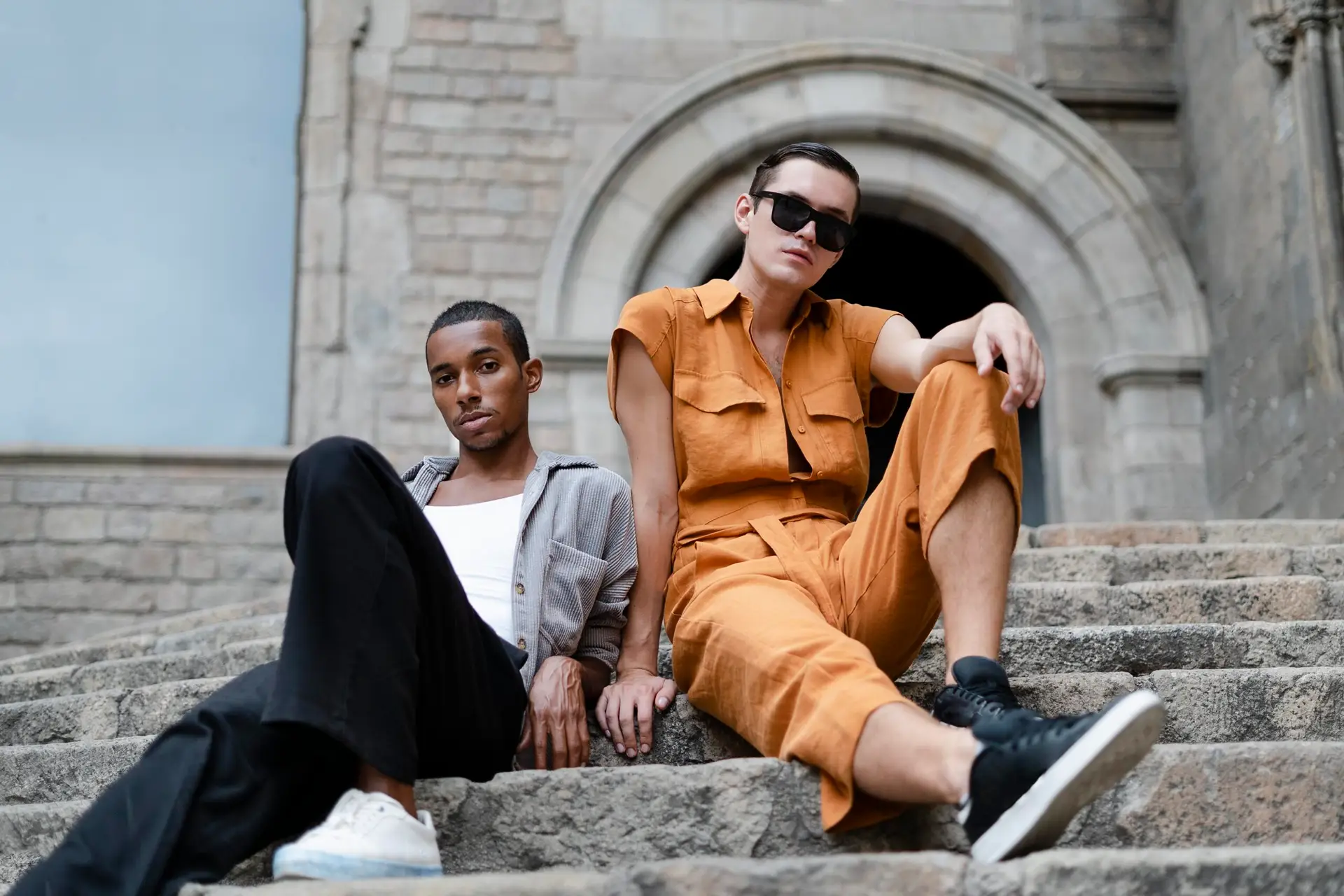
In recent years, fashion has become more inclusive and diverse, celebrating different body types, genders, and ethnic backgrounds. The rise of gender-neutral fashion, for example, signals a shift toward breaking traditional boundaries. People are embracing clothes that align with how they feel rather than what society expects.
Similarly, vintage and thrift fashion allow individuals to express creativity and values, promoting uniqueness over mass production and in this sense, fashion is evolving from being a statement of status to a statement of consciousness.
6. The Impact of Sustainability on Emerging Fashion Trend
As the environmental cost of fast fashion becomes undeniable, consumers are demanding accountability. According to studies, the fashion industry is responsible for around 10% of global carbon emissions and significant textile waste.
This awareness has inspired new trends:
Upcycled fashion: Designers repurposed old materials into new creations for a fashion trend
Capsule wardrobes: Consumers focus on versatile, long-lasting pieces.
Vintage revival: Secondhand shopping has become chic.
Ethical brands: Transparency about sourcing and labor practices is now a selling point.
The eco-conscious trend is not just about looking good — it’s about doing good. It represents a shift from consumption-driven fashion to purpose-driven fashion.
7. Future Fashion Trend: What Lies Ahead
Fashion’s future is intertwined with technology, sustainability, and personalization. Here are some emerging directions:
Digital Fashion & NFTs: Virtual clothing for avatars and social media profiles is gaining traction, allowing people to express style without physical waste.
Smart Fabrics: Materials that adjust to temperature or monitor health.
AI Personal Styling: Artificial intelligence tools that recommend outfits based on mood, weather, or personal history.
Circular Fashion Economy: Systems where clothes are rented, resold, or recycled to extend their lifecycle.
As boundaries between the physical and digital worlds blur, fashion will continue to redefine what it means to dress, express, and connect.
Conclusion: Emerging Fashion Trend as a Reflection of Human Evolution
Fashion trends are like chapters in a global story with each era adding new voices, textures, and meanings, making what we wear to be a testament to our collective creativity and adaptability, whether it’s a designer’s masterpiece or a DIY thrift find, fashion remains a powerful tool for expression and change.
In a world where trends evolve at lightning speed, the key to navigating fashion is authenticity, moreover, true style is not about following every wave.
It’s about knowing which waves align with your identity, after all, fashion fades, but style is eternal.
Related Drop: Fashion Trend